
The First Memorial
1959: A Centennial & A New Era
The year 1959 marked the 150th anniversary of Abraham Lincoln’s birth. To honor this, the U.S. Mint retired the classic wheat ears reverse design (1909-1958) and introduced the Lincoln Memorial. This makes the 1959 Lincoln Memorial cent a true first-year issue—a cornerstone for any collection. Struck in massive numbers at the Philadelphia Mint (which used no mint mark at the time), these coins entered circulation rapidly.
✨ Key Details of This Example ✨
- Year & Type: 1959 Lincoln Memorial Cent (First Year of Issue)
- Mint Mark: None — struck at Philadelphia
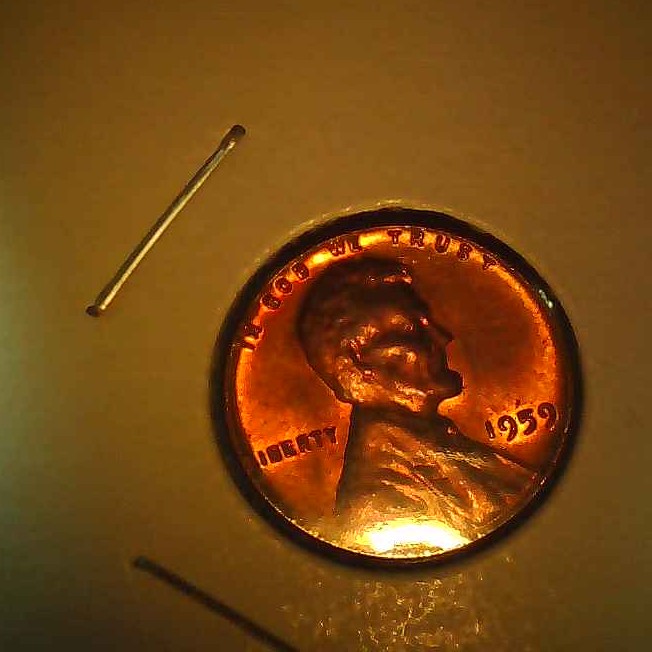
- Surface: Bright, vibrant reddish-orange tone with underlying luster
- Obverse: Lincoln’s portrait shows raised, sharp detail with light wear creating soft shadows in the folds of his robe and beard from circulation.
- Reverse: The Memorial building is finely embossed; the steps, columns, and statue detail are visible. Light handling has imparted gentle darkness in the recesses.
The Allure of “Red” Tones
This coin exhibits a captivating bright reddish tone—not the full, mint-state brilliant red, but a mature shade that hints at its age. For copper coins, tone is the result of gradual oxidation. A “red” penny like this one retains much of its original mint color, but with slight deepening from exposure. The warm, reddish-amber glow suggests careful storage over the decades, yet it’s not without signs of life.
Look closely at Lincoln’s portrait: the high points of his cheek, jaw, and coat lapel show a slightly lighter red, while the fields behind his head and around the bust have settled into a softer, darker reddish-brown. This contrast gives the image a three-dimensional, almost sculptural quality. It’s the kind of honest, original surface that collectors prize—never cleaned or polished, just naturally aged.
Circulation Shadows & Embossed Life
While the overall tone is bright, this penny did not escape circulation entirely untouched. The term “light circulation” is key here. On the reverse, the Lincoln Memorial’s columns and the inscription “UNITED STATES OF AMERICA” remain crisp and fully raised—a testament to the strength of the design. However, in the wide field above the memorial and within the lettering, you can observe faint, darker shadows. These are not flaws but the gentle kiss of countless fingertips and countertops, adding character and depth.
The fine, raised details are what make this first-year issue so attractive. The memorial’s foundation lines are distinct, and you can even make out the tiny figure of Lincoln inside the monument under good light. The motto “IN GOD WE TRUST” on the obverse is bold and unbroken. The embossing is precise, a hallmark of dies that were still relatively fresh in 1959.
No Mint Mark: The Philadelphia Story
The absence of a mint mark (below the date) tells us this penny was born at the main Mint in Philadelphia. In 1959, Philadelphia did not use a mint mark on cents. These coins flooded the East Coast and Midwest, but finding one today with such a retained reddish complexion is less common. Most were worn down or became dark brown. This example stands out as a superior survivor from the inaugural year of the Memorial cent series.
Collector’s Verdict: A 1959 penny with bright reddish tones and fine, raised details is a beautiful representation of a modern classic. It bridges the gap between the wheat-back cents of the past and the memorials that followed, all while wearing its gentle circulation history with pride.
Leave a Reply